
Its name then is claimed to have been Ictis, and later Ineswirtrin the ‘White Tin Island’ which was donated to Glastonbury by the King of Devon. It shares this claim to be Ictis with St.Michaels Mount in Cornwall where recent digs have been trying to find evidence of tin works.Both have the curious tidal effects. Tin ingots have been found in ship wrecks not too far away.
The Island has had other names or the years, early records apparently refer to it as St Michael's Island, more recently it became Borough Island, then Burr Island was used and eventually it became Burgh island.
Its believe that a monastery was established, most under the Hotel, and a small chapel which because a Huers hut.

In one series of postcards Burgh Island is described as Little Bermuda!

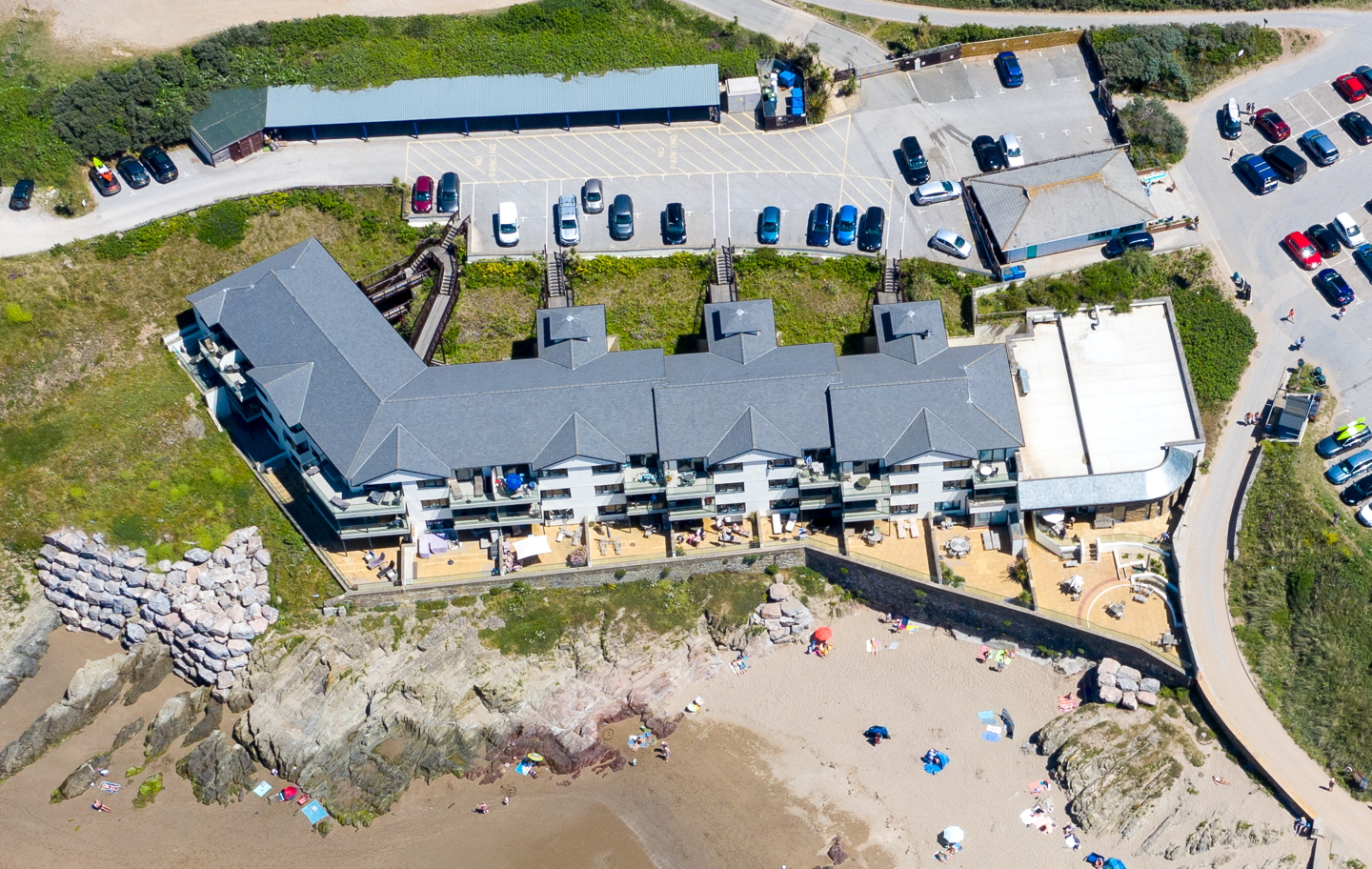
The small building on top of the island was a Huers hut where men could watch for the shoals of pilchards and warn the village to get ready. The pilchards were brought to the packing shed which stood where the apartments now stand.
As the Burgh Island Hotel developed they replaced the defunct pilchard plant and built a garage to hold the cars which the visitors travelled down in.
They built a large two-storey guests garage which held 50 cars, some in private lockups.
Then it became a visitor attraction (Smugglers Ope) and the Tom Crocker pub was built on the site.

We visited the Burgh Island Hotel for our wedding anniversary in 2008 and were completely captivated by the setting.

This has changed again in 2018 and has been lovingly restored and I'm sure that it will continue to evolve, a truly wonderful site and sight, the hotel has seriously ‘stepped up’ its offering.
Its pub The Pilchard Inn is a thoroughly enjoyable historical gem itself!
The current Hotel management have great plans for the hotel and Bigbury.

We are now on Facebook, at @12BurghIslandCauseway,
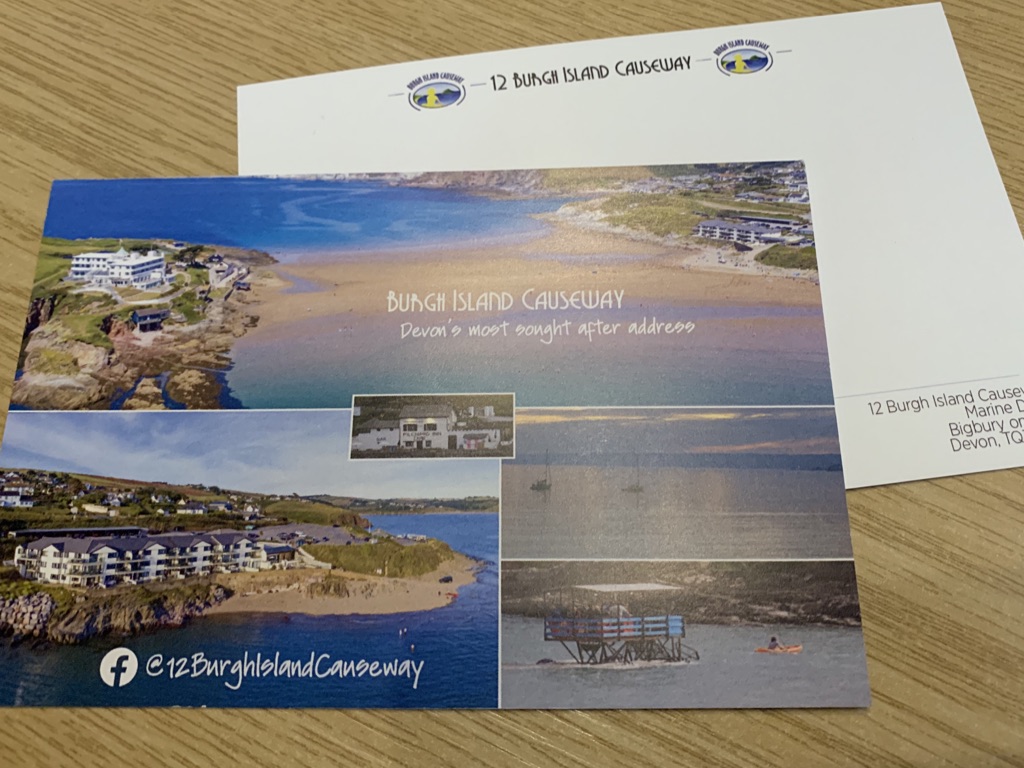
Apt 12 Burgh Island Causeway, Marine Drive, Bigbury on Sea, Kingsbridge, Devon, TQ7 4AS